Educators Honored as ‘Architects of Possibility’ at Albion MLK Convocation
By Maggie LaNoue, Contributing Writer
February 20, 2026
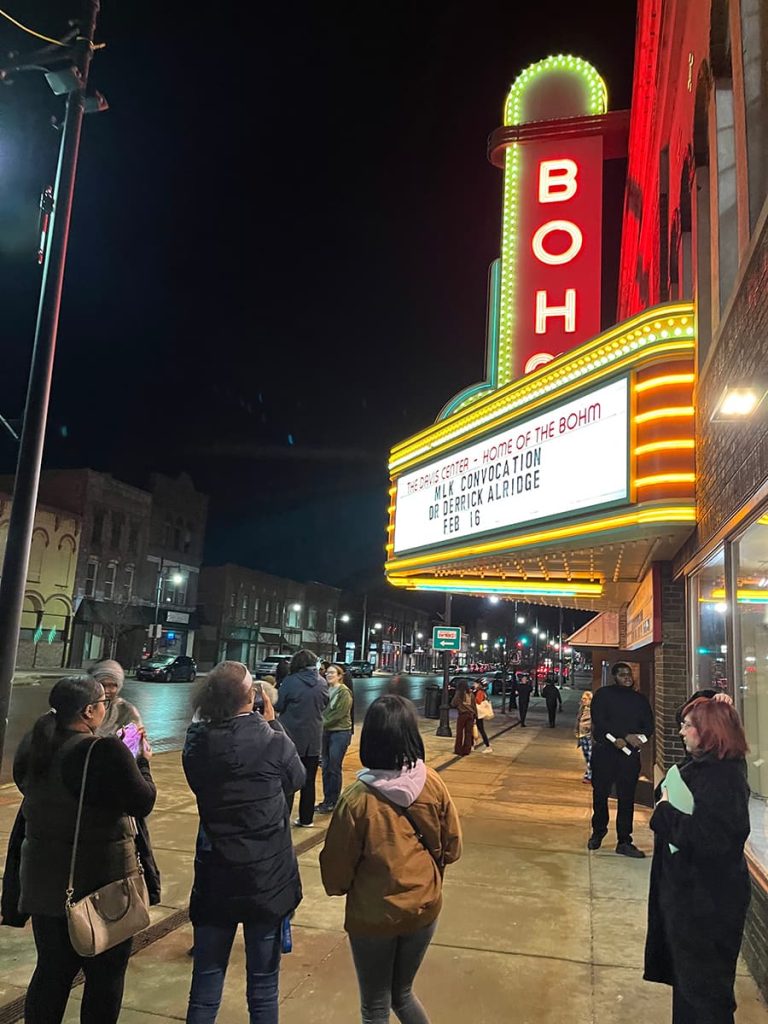
More than half a century after Dr. Martin Luther King Jr. stood at a Goodrich Chapel podium and warned that northern segregation could become “more serious” than its southern counterpart, Albion gathered Monday evening at the restored Bohm Theatre to honor the unsung heroes of his movement — the teachers.
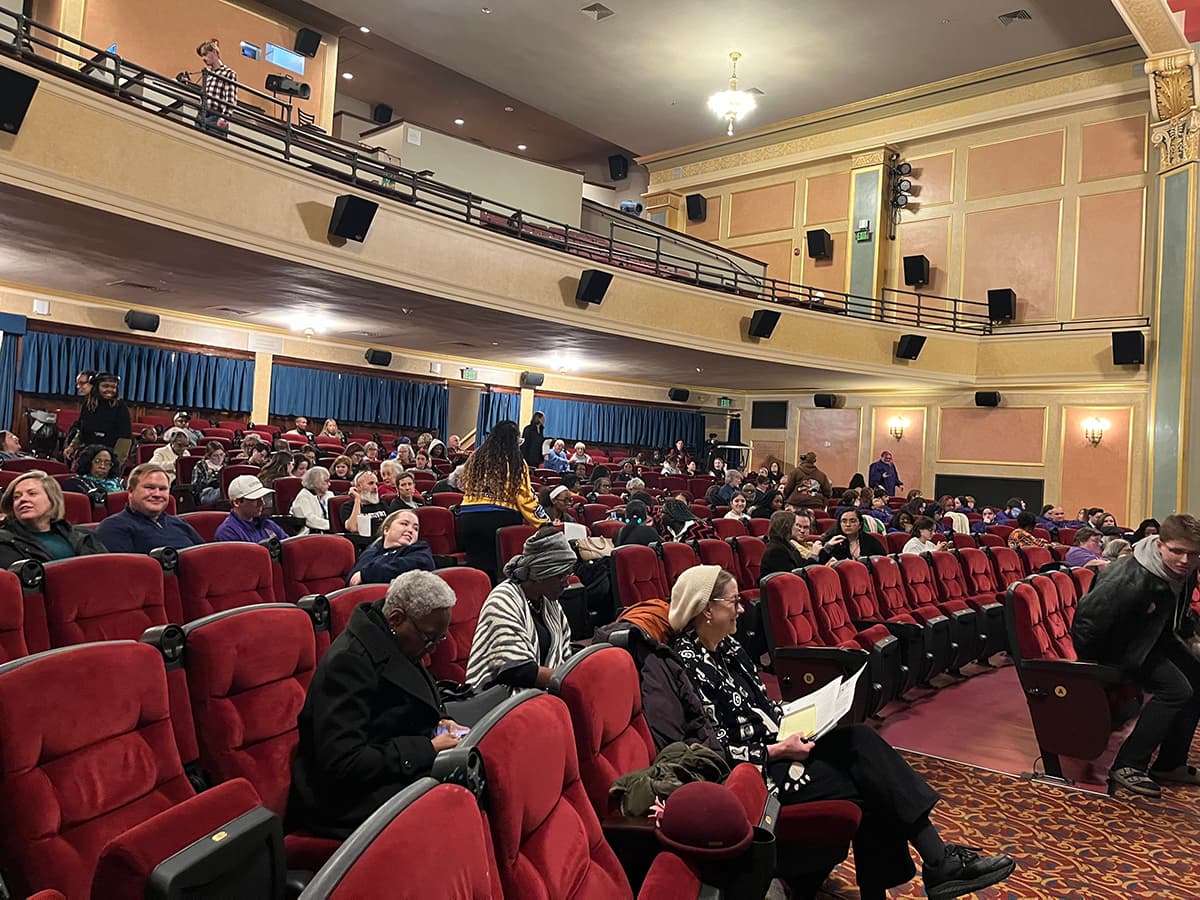
The 2026 Martin Luther King Jr. Convocation, held Feb. 16 on Presidents Day, drew students, families, clergy, and community members together for an evening of music, reflection, and a keynote address that challenged the audience to look beyond famous names and marches to find the real engine of the Civil Rights Movement: educators in the classroom.
“Education is not neutral,” said Rivkah Gamble, associate director of Albion College’s Office of Belonging, in her opening remarks. “It can be used to gatekeep or to open doors, to preserve inequality or to work to dismantle it. The legacy we honor today — Dr. King’s legacy — challenges us to choose the latter.”
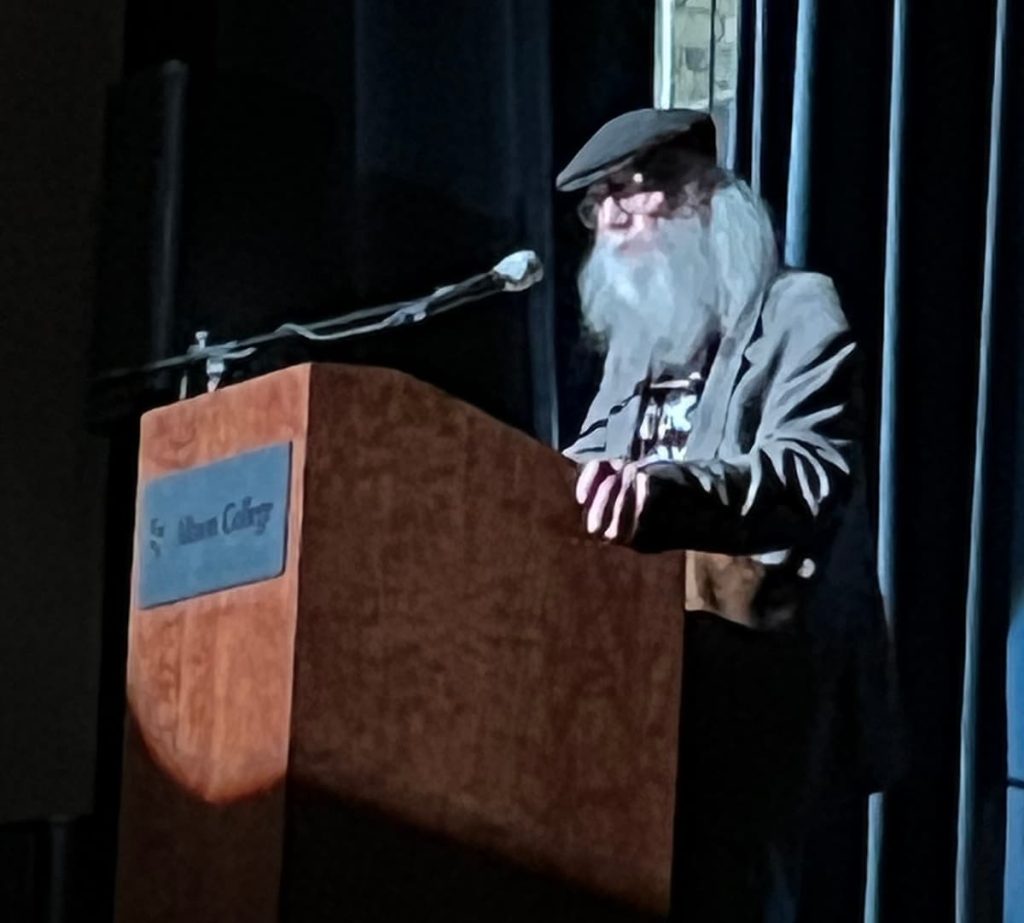
Dr. Wesley Dick, emeritus professor of history at Albion College and a Silver Life Member of the NAACP, offered a history of both the convocation and the community. He noted that this year marks the 11th anniversary of the event being held at the Bohm, and the 110th anniversary of the Great Migration’s arrival in Albion, when 64 Black men stepped off a train in November 1916, recruited from Pensacola, Florida, by the Albion Malleable Iron Company. Their families followed, and the city was never the same.
Dick also recalled King’s 1963 visit, when the civil rights leader spent nearly an hour and a half at Goodrich Chapel before walking across campus to continue talking with students and faculty. The headline in The Albion Evening Recorder that day: “Northern Segregation May Be More Serious.”
“Albion’s story is America’s story,” Dick said. “Albion’s history is America’s history.” He noted that when King spoke at Goodrich Chapel in 1963, there were only about a half dozen Black students at Albion College. Today, there are 161 African American students and 125 Latino students. “This can be described as a great migration of students to Albion College,” he said. “Nothing will ever be the same.”
Dick closed with King’s own warning from that 1963 visit: that two myths must be rejected — that time alone will erase injustice, and that education alone can solve it. “Nonviolent direct action is needed,” Dick said. With a nod to current events, he added that in 1776, Americans declared independence and rejected rule by kings — “and with one exception, Martin Luther King, we are here tonight because of that King.”
The keynote address was delivered by Dr. Derrick P. Alridge, the Philip J. Gibson Professor of Education at the University of Virginia and founder of the Teachers in the Movement Oral History Project, which has collected more than 500 videotaped interviews with educators who taught between 1950 and 1980.
Alridge grew up in Rockville, South Carolina, hearing stories in church about local teachers who stood up during the Civil Rights Movement — people who were never on television or in history books, but who were, he said, “the moral anchor of our community. These people taught us how to walk with dignity in a world that did not always affirm our humanity.”
His research found a surprising result: only about 30 percent of the teachers he interviewed identified themselves as activists. That led him to develop a new term — “pedagogical activism” — defined as the quiet, steady, everyday work of teaching for freedom: teaching Black history when it wasn’t in the curriculum, cultivating dignity and respect, modeling democratic ideals, and preparing students to navigate and transform an unjust world.
“King knew that laws could not change behavior,” Alridge said, “but education could change consciousness.”
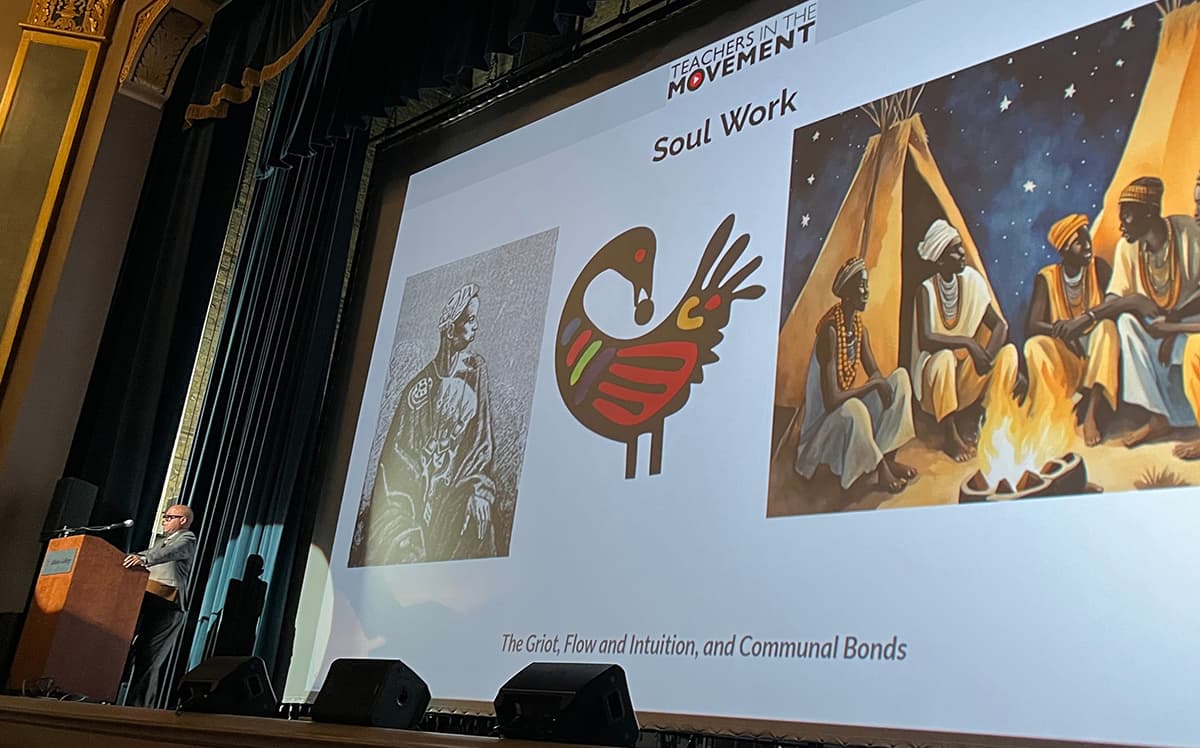
He introduced the concept of “soul work” — his research approach of treating teachers not as mere interview subjects but as griots: storytellers, carriers of memory, interpreters of community history. “They hold stories that textbooks never capture,” he said, “and they pass down wisdom that shapes generations.”
Alridge brought two teachers to life through oral history video recordings played for the audience. Laverne Spurlock, now 92, recalled her teacher, Mr. Joseph Ramsden, who taught African history from a slim textbook — and then set the book aside. “Mr. Ramsden was a reservoir of information,” Spurlock said in the recording. “He taught us all the little things that were not in the books.” Her advice to struggling teachers today: “If you can just teach one, the others will follow when they see that student learning.”
James Wright, a South Carolina State graduate who served in Vietnam before returning to teach Black history and eventually becoming a principal, kept every piece of material from his teaching career — student papers, lesson plans, coursework. “Black history was my weapon,” he told Alridge.
Alridge noted that when his research team asked teachers what influenced them most, they expected to hear about a favorite high school or college instructor. Instead, a surprising number pointed to grandmothers and mothers with little formal education. “They barely had an elementary school education,” he said, “but they were the smartest people that I know.” It was a reminder, he said, that teaching and wisdom flow through families and communities — not just classrooms.
Near the close of his talk, Alridge asked the educators in the audience to stand. “I acknowledge you as our freedom fighters — yesterday, today, and tomorrow,” he said. He described teachers as “architects of possibility” and called on all present to continue their work. “Every time a teacher cultivates critical thinking, nurtures empathy, or affirms a child’s humanity, they are doing the work of democracy. They are teaching the dream.”
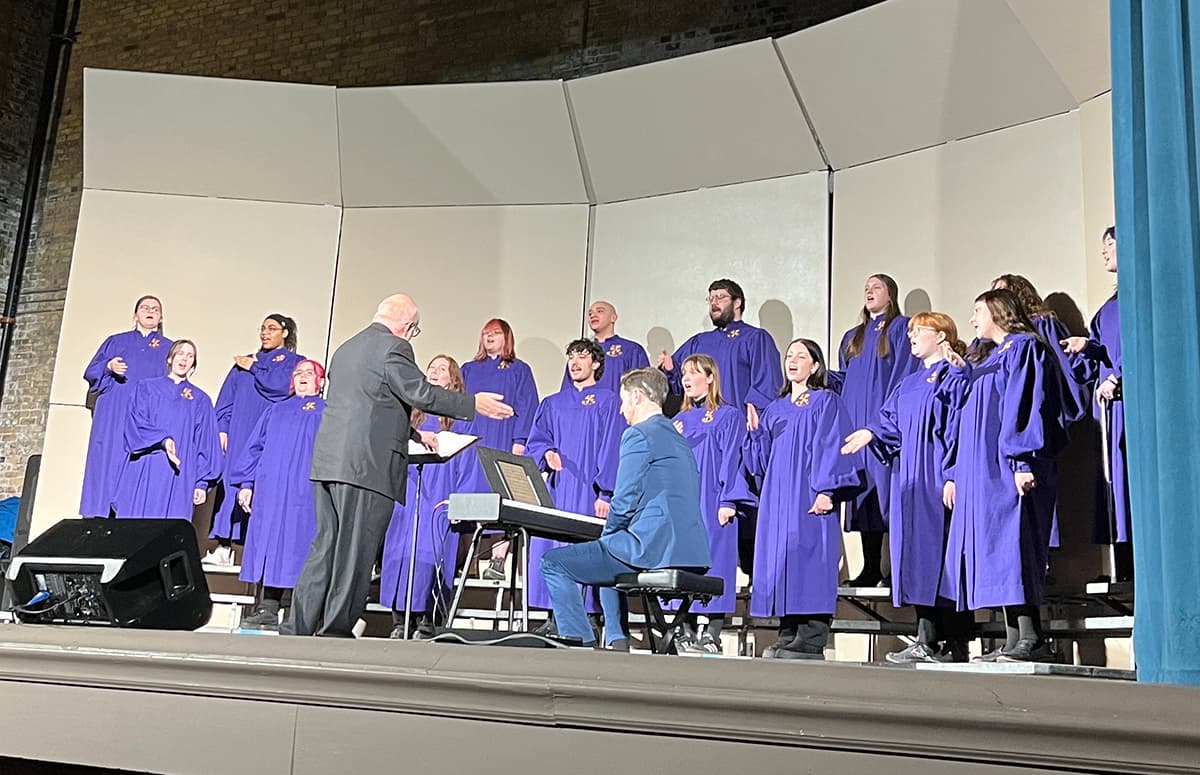
The program also included an invocation by Pastor Rachel Labram of Albion’s First United Methodist Church, music by the Albion College Concert Choir conducted by Dr. Clayton Parr ’80, and remarks from Sarynete Holmes ’27, vice president of the Black Student Alliance, who introduced the keynote speaker.
Betty Williams of the NAACP Education Committee announced that three scholarships were awarded in 2025 to Albion-area students: Ashton Ridley Melton, attending the University of Michigan, and Daiziyah Burch and Diara Burch, both attending Wayne State University. A $1,000 anonymous donation was received and announced during the event for the 2026 scholarship fund. Donations may still be made at albionnaacp.org.
The convocation reflects a deep partnership between Albion College and the Albion Branch NAACP, with both organizations sharing costs to bring the annual event to the community. Albion College students were actively involved throughout the evening — from Sarynete Holmes ’27 introducing the keynote speaker as vice president of the Black Student Alliance, to the Concert Choir’s performances, to student volunteers and organizers working behind the scenes. College President Wayne Webster attended the event, joining the nearly full theater of community members for the evening of music, history, and reflection.
The convocation closed with words from Ari McCaskill, executive director of the James L. Curtis Institute for Social Change, who quoted Mary McLeod Bethune: “Believe in yourself, learn, and never stop wanting to build a better world.”
This article is part of The Recorder’s Black History Month coverage.