Michigan was one of five states holding primary elections that day. The state’s ballot drew national attention because of an open U.S. Senate seat, with Sen. Gary Peters choosing not to seek re-election, and an open race for governor as term-limited Gov. Gretchen Whitmer prepares to leave office.
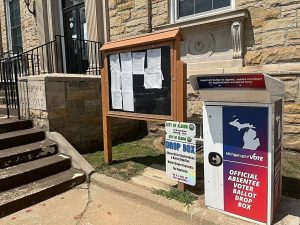
Michigan’s primary election system requires voters to choose either the Democratic or Republican ballot and remain within that party’s column. Unlike the November general election, voters cannot split their selections between parties during the primary.
A sample Albion ballot showed only a few contested races. On the Democratic side, voters chose among Jocelyn Benson and Christopher Swanson for governor, and among Haley Stevens and Abdul El-Sayed for U.S. Senate, along with a three-way race for the 17th District state Senate seat. Republican voters saw four names on the ballot for governor – Mike Cox, John James, Perry Johnson and Aric Nesbitt – but only two, James and Johnson, were still actively campaigning by Election Day. Most other offices on both party ballots listed only one candidate.
Three candidates whose names remained on the ballot were no longer actively campaigning. Democratic U.S. Senate candidate Mallory McMorrow suspended her campaign in July. On the Republican side, both Mike Cox and Aric Nesbitt withdrew from the governor’s race after ballots had already been printed – Nesbitt dropped out and endorsed James – leaving all three names on Michigan ballots regardless.
The Senate race also drew national attention. El-Sayed, who would be the first Muslim U.S. senator if elected, has been backed by progressive leaders including Sen. Bernie Sanders and Rep. Alexandria Ocasio-Cortez, both of whom campaigned with him in Michigan in the weeks before the primary. Stevens, by contrast, has the support of establishment Democrats including Gov. Whitmer and Sen. Peters. On the Republican side, Mike Rogers, who faced no serious primary opposition, has leaned into his alliance with President Trump, who has endorsed him.
That national attention has come with a wide gap in campaign spending. According to Bridge Michigan, a nonpartisan Michigan news outlet, outside groups have spent tens of millions of dollars more on the Democratic Senate primary than the candidates have raised themselves, with the bulk of that outside spending benefiting Stevens. The El-Sayed and Stevens campaigns together raised roughly $23 million for the cycle, while outside groups have reported spending closer to $43 million on the race between them.
The only local question on Albion’s ballot was renewal of the Albion District Library’s 2.4777-mill operating levy for another 10 years, from 2027 through 2036. Library officials estimated the renewal would generate about $750,000 during its first year and provide nearly 77 percent of the library’s operating budget. The funding supports services including internet hotspots, free printing of government forms, digital resources and programs for children, teens and adults.
Under the ballot language, a portion of the revenue will continue to be captured by the Brownfield Redevelopment Authority as required by law, and 25 percent of the millage collected within Albion Township will continue to be shared with the Homer Public Library under an existing agreement.
The Associated Press called Michigan’s governor races Tuesday night: Secretary of State Jocelyn Benson won the Democratic nomination at 9 p.m., and U.S. Rep. John James won the Republican nomination at 10:24 p.m., according to results published by Bridge Michigan. Republican Mike Rogers, who faced no primary opposition, will carry the GOP U.S. Senate nomination. In the 17th District state Senate race, which includes Albion, Ashleigh Baker won the Democratic nomination with 55.3 percent of the vote, according to the Michigan Secretary of State’s Voter Information Center.
Abdul El-Sayed defeated Rep. Haley Stevens in the Democratic U.S. Senate primary, a race the Associated Press called at 9:56 a.m. Wednesday with 99 percent of votes counted. The two finished about one percentage point apart, 48.5 percent to 47.5 percent. State Sen. Mallory McMorrow, who had suspended her campaign in July but remained on the ballot, received 4 percent. El-Sayed will face Republican Mike Rogers in November.
The Albion District Library millage renewal passed, with unofficial results from the Calhoun County Clerk’s office showing 1,166 votes in favor and 369 opposed, or about 76%, as of Wednesday morning.
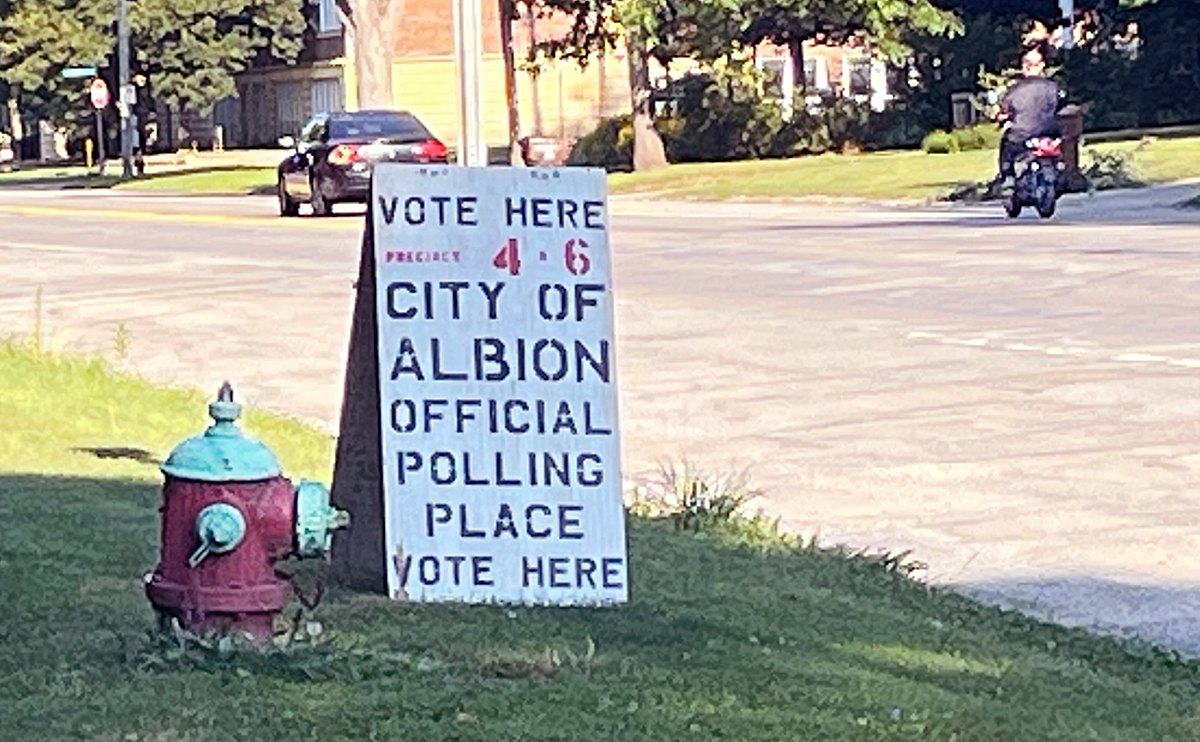
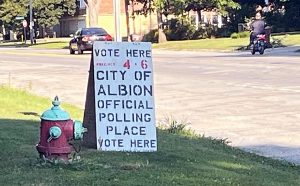
Voter turnout in Albion varied widely by precinct, according to Calhoun County Clerk’s office data reported Wednesday morning: Precinct 1 posted the lowest turnout at 13.49%, followed by Precinct 2 at 14.94%, Precinct 4 at 19.31%, Precinct 3 at 24.94%, Precinct 5 at 27.18% and Precinct 6 at 28.01%, the highest. Precinct 1, which is currently navigating the heaviest road construction the area has seen in years, posted the lowest turnout of any Albion precinct.