Council unanimously approved a resolution authorizing the city to apply for Clean Water State Revolving Fund financing for infrastructure improvements. The vote does not commit the city to taking a loan or raising rates. It simply keeps Albion eligible to move forward in the state funding process.
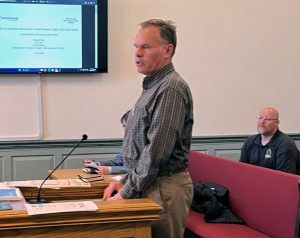
The engineering assessment examined approximately 110,000 feet of pipe. Of that, roughly 44,000 feet have already been identified as needing replacement or repair. An additional 144,000 feet remain to be televised in a future phase; their condition is currently unknown. Bittner estimated that the phase could reveal even more extensive needs. “Probably 60,000 feet, maybe more,” he said. “It’ll probably be a heftier project.”
Bittner was direct about how the city got to this point. The system suffered from “lack of investment that probably occurred for 30 years or 35 years,” he said. “It’s unfortunate.” He was equally direct about the consequences of inaction once problems are documented. “We have knowledge of this. We know this is the condition. It would not be responsible to say, ‘Let this go.'”
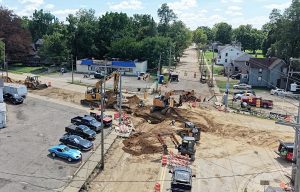
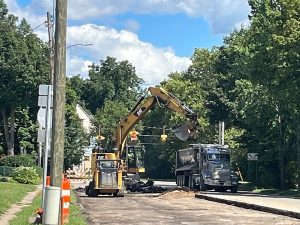
One street stood out in his presentation: Irwin Avenue. When the city replaced the water main there around 2020 or 2021, the sewer was left untouched. That decision now makes it the top priority in the new project. The situation illustrates a challenge engineers face across Albion: the three underground systems age at different rates, and addressing one does not automatically fix the others. “I would hate to see anything happen there,” Bittner said. “That was priority one of the first projects I said: we have got to do Irwin Avenue.”
Nearly all of Irwin Avenue’s sewer pipes are rated 4 or 5 on a condition scale, making them eligible for lining rather than full excavation. One 300-foot segment in the middle is rated a 3, which EGLE typically does not approve for lining. Bittner said his firm plans to argue that it should qualify, given its age and the condition of the surrounding pipe. “We’ve been successful in other applications where we’ve made that case,” he said.
The funding program is a loan, not a grant. Bittner was careful to make that clear. “I just want to stress it; it’s essentially a loan program,” he said. The projected rate increase to cover debt payments would raise the average monthly water bill from approximately $40 to $65-$70, roughly a 60 percent increase under the recommended alternative. Bittner said those higher rates would bring Albion in line with regional norms. Some principal forgiveness on the overall project is possible. Last year, EGLE offered 13 percent forgiveness for overburdened communities and 18 percent for significantly overburdened communities. Bittner cautioned that it is not guaranteed to continue, but said the projected increase likely represents “a worst-case scenario.” Councilmember CJ Frost noted the burden plainly: going from $40 to $65 or $70 a month “is a pretty big increase” for a community with Albion’s demographics.
The engineering work is not just about documenting problems. It is what makes the funding possible. Without the assessment, the application cannot be filed. Without the application, Albion has no seat at the table when the state allocates funds later this year. The state is expected to publish a draft funding list in September and a final list in October, at which point loan amounts and forgiveness percentages will become clear. If Albion is offered funding, it must have 90 percent of its design plans submitted by February. Miss that deadline, Bittner cautioned, and the funding is gone. “You’re not automatically in for the next round,” he said.
This pattern of thorough engineering work aligned precisely with grant and loan application deadlines has become familiar in Albion. It is the same approach the city has taken with road reconstruction projects funded through congressional directed spending and federal surface transportation programs. The experts do their due diligence. The timeline is set by the money sources.
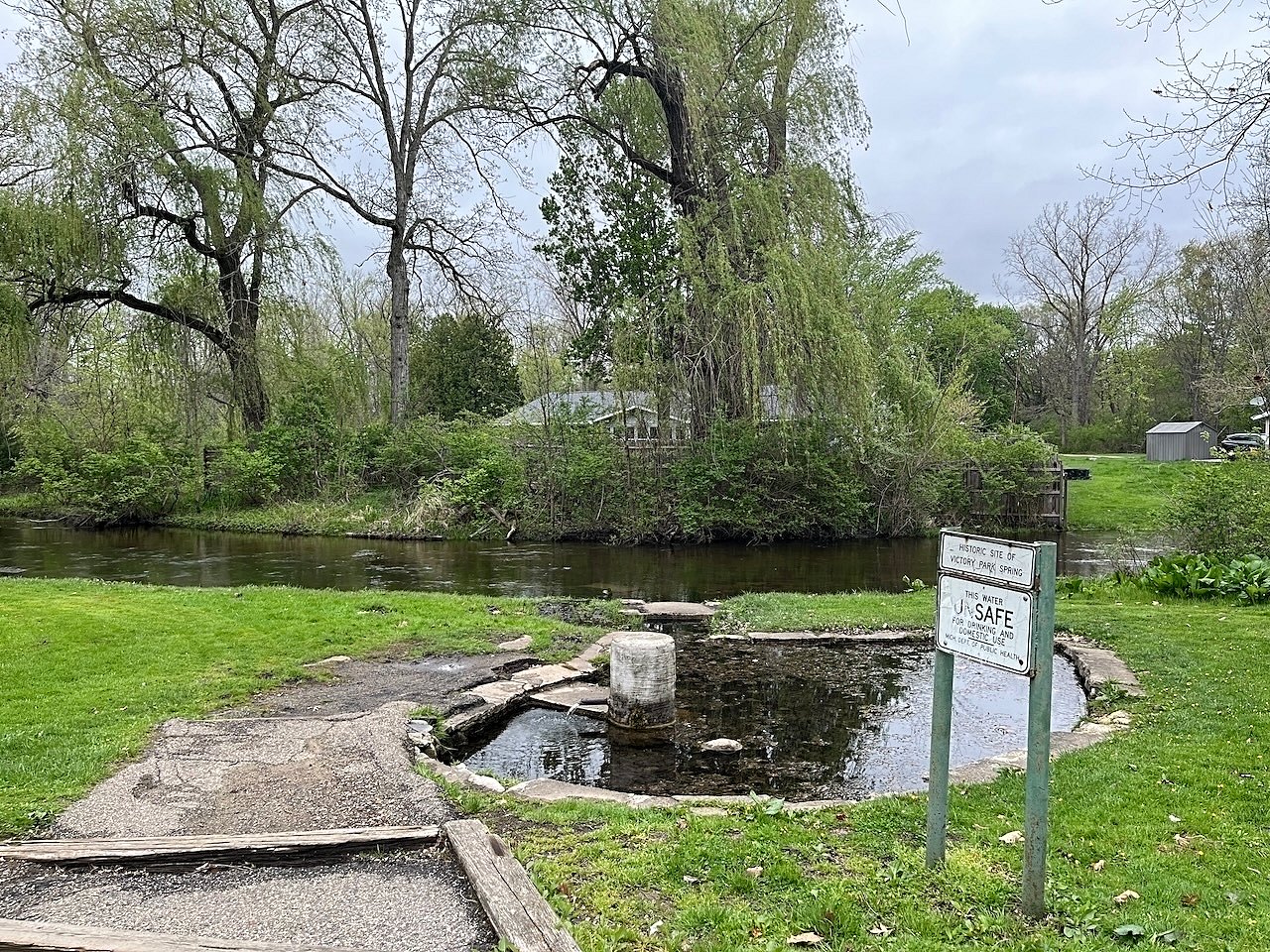
One of the most important components of that work is a community that is building its understanding of a bigger picture still coming into focus. Residents showing up at town halls and council meetings, asking questions about the river, the trees, the historic buildings, and the pipes beneath the streets, are part of the process. Each of those conversations adds to a shared understanding that no single story or meeting can fully capture. The infrastructure beneath Albion connects to everything above it, and the people paying attention are helping to shape what comes next.
Phase 2 of the assessment will examine the remaining 144,000 feet of pipe whose condition is currently unknown. Based on Phase 1’s findings, Bittner said the results are unlikely to improve. The recommended work under the current application addresses roughly half the total need. The April 20 vote starts a clock, not a commitment. But it reflects something more than paperwork. It is evidence that Albion’s infrastructure planning is moving in a deliberate direction, with engineers who know the system, a council willing to act, and funding pathways that make the work possible. Understanding how Albion’s underground water systems connect to the river, the parks, and the streets above is part of a bigger picture that the community is still working to see in a wider context.